
Vision
A century of infrastructure reaches the end of its useful life
Most of the roads, bridges, power plants, water networks, ports and airports the world runs on were built in the last hundred years, and much of that stock is wearing out at the same time.
Rebuilding and running the world’s infrastructure will take about
$500 trillion
over the next fifty years.
- $300T
- to build the physical assets: roads, rail, ports, grids, water, cities, schools and hospitals
- $150T
- to operate and maintain them across the life of each concession
- $50T
- for the sensors, compute and robotics that will sit inside them, the share of the rebuild that venture capital can fund
Public-private partnerships (PPPs) will carry much of it, because governments cannot fund, build and run the rebuild alone, and the private sector cannot do it without them.
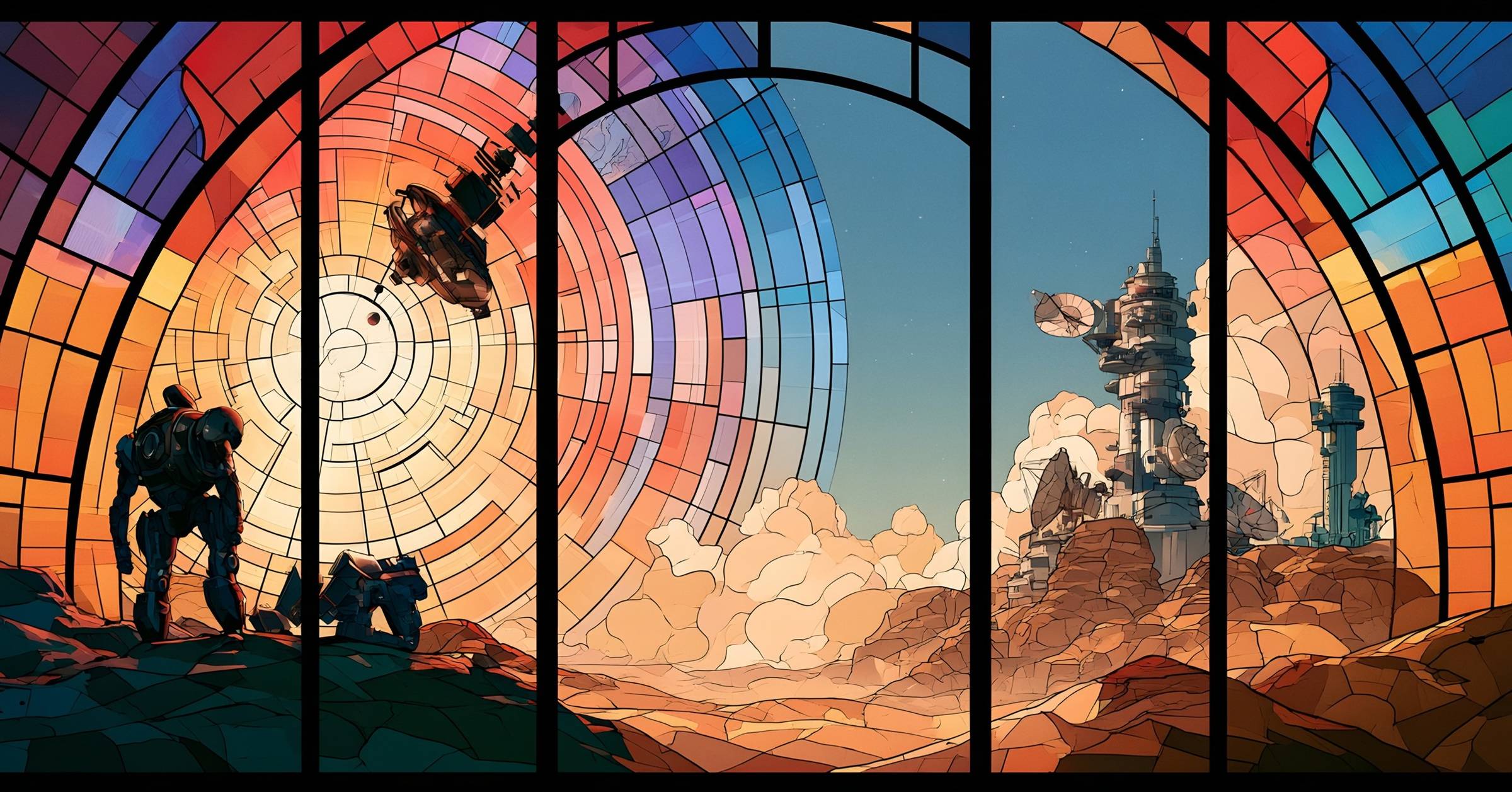
The next fifty years will build Earth’s largest computer
Future infrastructure will be self-building, self-monitoring and self-healing. Assets will monitor their own condition, predict their own failures and schedule their own maintenance, and fleets of machines will raise them with very few human hands involved.
The point where the built world starts improving itself faster than anyone can direct it is the infrastructure singularity.
Three technologies
Artificial intelligence, robotics and tokenization bring the singularity closer
01
AI designs and runs it
A PPP takes about seven years from concept to financial close and costs roughly ten percent of capex to structure. Almost all of that work is documents and models, which is the work AI does well.
02
Robotics builds and maintains it
Tunneling machines, construction robots, drones and modular factories already raise structures with far fewer people on site. A small company with the right machines can build what once needed a thousand-person contractor.
03
Tokenization finances it
Tokenization lets a small pilot be funded by a few hundred investors, with returns paid automatically from the asset’s own revenue and no lender between them.
The PPP pyramid
PPP innovation must start with small projects
Every PPP sits somewhere on a scale of nine sizes, each ten times the last. Learning happens fastest at the base, where a country can run hundreds of pilots for the cost of studying one large project.
- Cosmic PPP$1 trillion
- Terra PPP$100 billion
- Giga PPP$10 billion
- Mega PPP$1 billion
- Metro PPP$100 million
- Urban PPP$10 million
- Mini PPP$1 million
- Micro PPP$100,000
- Nano PPP$10,000
Futureproofing
Futureproof your organization for the infrastructure singularity
The infrastructure singularity will change how every organization plans, builds, runs and finances what it owns. Organizations that start learning by building now, with small PPPs of their own, will be ready to lead it.
01Plan and design
- Today
- A single $100 million PPP can spend $10 million on studies and preparation before anything is built.
- At the singularity
- Artificial intelligence designs, structures and tests each project, and building the pilot costs less than studying it.
- Start now
- Run small PPPs in parallel and learn by building.
02Build
- Today
- Construction still depends on large crews working by hand on every site.
- At the singularity
- Fleets of robots raise new assets with very few human hands.
- Start now
- Pilot robotics on your own sites through a research lab in your sector.
03Operate and maintain
- Today
- Most repairs follow a breakdown or a fixed inspection calendar.
- At the singularity
- Roads, grids, ports and water networks monitor their own condition, predict their own failures and schedule their own repairs.
- Start now
- Collect data from every asset and every pilot from its first day.
04Finance and own
- Today
- The World Bank counted 315 private infrastructure projects reaching financial close across all low- and middle-income countries in 2024, only a few per country.
- At the singularity
- Tokenization funds small pilots from the asset’s own revenue and opens infrastructure ownership to everyone.
- Start now
- Test tokenized funding on a small pilot that earns its own revenue.
Where it starts
Jordan starts with its own projects
- $86B
- of PPP and infrastructure projects in development across Jordan
- $46B
- of them anchored in Aqaba
Questions
Questions about the infrastructure singularity
- How much will it cost to rebuild the world’s infrastructure?
- Rebuilding and running the world’s infrastructure will take about $500 trillion over the next fifty years: $300 trillion to build the physical assets, $150 trillion to operate and maintain them, and $50 trillion for the sensors, compute and robotics inside them.
- Why will public-private partnerships carry the rebuild?
- Governments cannot fund, build and run the rebuild alone, and the private sector cannot do it without them, so public-private partnerships (PPPs) will carry much of it.
- What is the infrastructure singularity?
- The infrastructure singularity is the point where the built world starts improving itself faster than anyone can direct it. Future infrastructure will monitor its own condition, predict its own failures and schedule its own maintenance.
- Which technologies bring the infrastructure singularity closer?
- Artificial intelligence designs and runs the assets, robotics builds and maintains them, and tokenization finances them and opens their ownership to everyone.
- How can an organization futureproof itself for the infrastructure singularity?
- By learning by building now: launch a PPP program of its own, run small PPPs in parallel, open a research lab in its sector, collect data from every asset and pilot, and test AI, robotics and tokenization on small projects before they reach its largest ones. Each guide turns this into six first steps for one kind of organization.
- Where does it start?
- It starts in Jordan, with about $86 billion of PPP and infrastructure projects in development, $46 billion of them anchored in Aqaba, and 52 free guides that show every kind of organization how to launch a PPP program.